






Spark Thinking takes its visual-thinking method to print with illustrated math primer
Spark Thinking, the Beijing-based provider of small-class live thinking-skills courses, has published an illustrated primary school math preview book, extending a teaching method built on screen to paper.
Titled "Easy to Understand: An Illustrated Primary School Math Preview Book" and published by the Encyclopedia of China Publishing House, the series covers grades one through five and turns abstract concepts into step-by-step visual diagrams. Wu Qiong, who heads the company's book business, describes it as a standardized export of a curriculum system the company has refined over years.
The premise is that previewing should build intuitive understanding of where a concept comes from, not familiarity with a procedure. Spark Thinking says its goal is not to teach students to solve one problem but to build a habit of active, deeper thinking, anchored on two points: attention to a child's emotional experience, and making the thinking process visible.
That shows up in the book's use of what the team calls cognitive conflict — presenting a line of reasoning that looks reasonable but contains a hidden error, then guiding students to find the contradiction and derive the correct conclusion themselves. "The design isn't meant to create difficulty," Wu said, but to give students the satisfaction of understanding the essence after moving through confusion and investigation.
Diagrams are the main explanation rather than a supplement to text. Rewriting numbers above 100 million is taught with arrows and place-value markers so students spot the relationship between zeros and the ten-thousands position on their own; a jelly-packing scenario breaks multiply-add and multiply-subtract problems into three solution paths, so the order of operations emerges as a practical shortcut rather than a rule to memorize. Exercises run basic, variation and challenge, and each unit is built for a 30-minute session: five minutes of scenario, ten of concept, fifteen of practice.
The book sits beneath Spark Thinking's "new nine-stage" development framework, which maps nine stages from concrete experience to abstract transfer across pre-school to upper primary, and within which each grade is split into eight class types at different difficulty levels — dynamic tiering the company insists is not a fast-track/slow-track split.
AI runs through the wider system. The company says AI-assisted development of interactive courseware and content checking has lifted R&D efficiency by more than 30%; models support teachers with lesson preparation and diagnose weak points from error data. On the parent app, students photograph completed paper exercises for feedback — though Wu stressed the marking is designed to push students to identify why they went wrong rather than hand over the answer.
Spark Thinking reports more than 900,000 cumulative learners across over 100 countries and regions, with monthly retention above 96%. In March 2026 it was cited as a case study in a report on core competencies for children in the AI era from the Chinese Academy of Sciences' research center for virtual economy and data science. In February, 15,080 children took part in its "Little Teacher Challenge," which the company says set a Guinness World Record for the largest online collection of math problem-solving videos.
Titled "Easy to Understand: An Illustrated Primary School Math Preview Book" and published by the Encyclopedia of China Publishing House, the series covers grades one through five and turns abstract concepts into step-by-step visual diagrams. Wu Qiong, who heads the company's book business, describes it as a standardized export of a curriculum system the company has refined over years.
The premise is that previewing should build intuitive understanding of where a concept comes from, not familiarity with a procedure. Spark Thinking says its goal is not to teach students to solve one problem but to build a habit of active, deeper thinking, anchored on two points: attention to a child's emotional experience, and making the thinking process visible.
That shows up in the book's use of what the team calls cognitive conflict — presenting a line of reasoning that looks reasonable but contains a hidden error, then guiding students to find the contradiction and derive the correct conclusion themselves. "The design isn't meant to create difficulty," Wu said, but to give students the satisfaction of understanding the essence after moving through confusion and investigation.
Diagrams are the main explanation rather than a supplement to text. Rewriting numbers above 100 million is taught with arrows and place-value markers so students spot the relationship between zeros and the ten-thousands position on their own; a jelly-packing scenario breaks multiply-add and multiply-subtract problems into three solution paths, so the order of operations emerges as a practical shortcut rather than a rule to memorize. Exercises run basic, variation and challenge, and each unit is built for a 30-minute session: five minutes of scenario, ten of concept, fifteen of practice.
The book sits beneath Spark Thinking's "new nine-stage" development framework, which maps nine stages from concrete experience to abstract transfer across pre-school to upper primary, and within which each grade is split into eight class types at different difficulty levels — dynamic tiering the company insists is not a fast-track/slow-track split.
AI runs through the wider system. The company says AI-assisted development of interactive courseware and content checking has lifted R&D efficiency by more than 30%; models support teachers with lesson preparation and diagnose weak points from error data. On the parent app, students photograph completed paper exercises for feedback — though Wu stressed the marking is designed to push students to identify why they went wrong rather than hand over the answer.
Spark Thinking reports more than 900,000 cumulative learners across over 100 countries and regions, with monthly retention above 96%. In March 2026 it was cited as a case study in a report on core competencies for children in the AI era from the Chinese Academy of Sciences' research center for virtual economy and data science. In February, 15,080 children took part in its "Little Teacher Challenge," which the company says set a Guinness World Record for the largest online collection of math problem-solving videos.




Related Articles
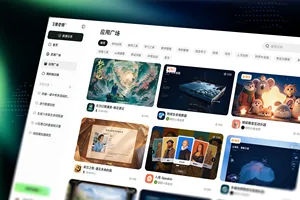 Feixiang Teacher 3.0 lets educators generate AI-powered learning apps from a single prompt
 Laizhou gives 6,000+ teachers an AI agent in citywide first for China
 Moroccan online tutoring platform Smartprof raises investment from Fuze
 Youdao announces pricing of Follow-on Public Offering of American Depositary Shares
JMDedu is a leading B2B EdTech Media in China that informs and connects business professionals through our reports, events, and information services. Our mission is to drive the advancement of education. Our network spans the education industry in China as well as globally, including entrepreneurs, investors, startups, educators, business decision-makers, and policy decision-makers.

Copyright © 2014-2026 en.jmdedu.com All Rights Reserved