






Laizhou gives 6,000+ teachers an AI agent in citywide first for China
Laizhou, a county-level city in East China's Shandong Province, has given more than 6,000 teachers an AI assistant ahead of the new school year, in what organizers describe as the first citywide deployment of education AI agents led by a local education authority in China.
The rollout was launched on Aug. 26 by the Laizhou Education and Sports Bureau together with Tencent, at the new campus of Laizhou No. 2 Experimental Primary School. Every primary and secondary school teacher in the city is being equipped with an AI agent built on WorkBuddy's teacher edition, alongside citywide hands-on training.
Unlike most AI pilots in Chinese schools — which typically start with a handful of schools or volunteer teachers — Laizhou moved straight to full coverage. The agent is designed to support lesson planning, instruction, grading, teaching research, assessment, class management and parent communication.
Zhang Yong, Party secretary and head of the Laizhou Education and Sports Bureau, framed the shift as three transitions: from "teachers looking for tools" to "tools reaching teachers," from "everyone using AI" to "AI embedded in every scenario," and from "knowing how to use AI" to "using AI well."
The deployment did not come out of nowhere. Laizhou formed an AI education group in 2024 made up of teachers willing to experiment and share what they learned. In July 2026, the city formally established an AI education studio and completed the selection of its first batch of AI pilot schools. Over the summer break, 76.5% of teachers in the city were using WorkBuddy — the highest acceptance the city had recorded among agent tools it had trialed.
To lower the barrier for classroom use, WorkBuddy has listed 33 education experts and 15 teaching skills together with Tencent's Penguin Teacher Assistant, covering lesson preparation, teaching research, learning analytics and parent communication. Its education edition offers three working modes — instructional design, home-school collaboration and professional growth — spanning 21 teaching scenarios, including courseware creation, project-based lesson generation and material processing.
For Wang Jing, an English and homeroom teacher at Shahe Town Central Primary School, the appeal was mundane rather than experimental: she used to spend hours each month compiling and cross-checking student fitness test data, and now hands the task to the agent. Ma Qingmei, a biology teacher at Yunfeng School, said work that once took most of a day — building a simulated lab demonstration — now takes about 20 minutes, and she also used the agent to help with class scheduling before term began.
Ren Juntao, who heads the city's AI education studio, argued that what frontline teachers lack is not the ability to fill in forms or build basic slides, but experience, judgment and understanding of teaching. AI, he suggested, can take over non-creative work first — a shift he sees as particularly favorable to mid-career teachers, whose experience may become an advantage again in the AI era. He Jialuo, content lead at Tencent's SSV Digital Education Lab, struck a cautionary note: teachers must remain the final checkpoint for human review.
Tencent plans an AI Pioneer Teacher incentive program using points, training and case sharing to encourage teachers to build and publish skills. Laizhou will assess the rollout by year-end and publish a white paper on its "Laizhou model" for agent development, with further use cases planned around AI essay grading, tiered homework generation, collaborative lesson planning and parent communication.
The rollout was launched on Aug. 26 by the Laizhou Education and Sports Bureau together with Tencent, at the new campus of Laizhou No. 2 Experimental Primary School. Every primary and secondary school teacher in the city is being equipped with an AI agent built on WorkBuddy's teacher edition, alongside citywide hands-on training.
Unlike most AI pilots in Chinese schools — which typically start with a handful of schools or volunteer teachers — Laizhou moved straight to full coverage. The agent is designed to support lesson planning, instruction, grading, teaching research, assessment, class management and parent communication.
Zhang Yong, Party secretary and head of the Laizhou Education and Sports Bureau, framed the shift as three transitions: from "teachers looking for tools" to "tools reaching teachers," from "everyone using AI" to "AI embedded in every scenario," and from "knowing how to use AI" to "using AI well."
The deployment did not come out of nowhere. Laizhou formed an AI education group in 2024 made up of teachers willing to experiment and share what they learned. In July 2026, the city formally established an AI education studio and completed the selection of its first batch of AI pilot schools. Over the summer break, 76.5% of teachers in the city were using WorkBuddy — the highest acceptance the city had recorded among agent tools it had trialed.
To lower the barrier for classroom use, WorkBuddy has listed 33 education experts and 15 teaching skills together with Tencent's Penguin Teacher Assistant, covering lesson preparation, teaching research, learning analytics and parent communication. Its education edition offers three working modes — instructional design, home-school collaboration and professional growth — spanning 21 teaching scenarios, including courseware creation, project-based lesson generation and material processing.
For Wang Jing, an English and homeroom teacher at Shahe Town Central Primary School, the appeal was mundane rather than experimental: she used to spend hours each month compiling and cross-checking student fitness test data, and now hands the task to the agent. Ma Qingmei, a biology teacher at Yunfeng School, said work that once took most of a day — building a simulated lab demonstration — now takes about 20 minutes, and she also used the agent to help with class scheduling before term began.
Ren Juntao, who heads the city's AI education studio, argued that what frontline teachers lack is not the ability to fill in forms or build basic slides, but experience, judgment and understanding of teaching. AI, he suggested, can take over non-creative work first — a shift he sees as particularly favorable to mid-career teachers, whose experience may become an advantage again in the AI era. He Jialuo, content lead at Tencent's SSV Digital Education Lab, struck a cautionary note: teachers must remain the final checkpoint for human review.
Tencent plans an AI Pioneer Teacher incentive program using points, training and case sharing to encourage teachers to build and publish skills. Laizhou will assess the rollout by year-end and publish a white paper on its "Laizhou model" for agent development, with further use cases planned around AI essay grading, tiered homework generation, collaborative lesson planning and parent communication.




Related Articles
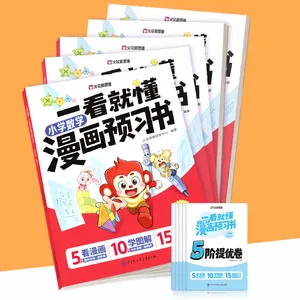 Spark Thinking takes its visual-thinking method to print with illustrated math primer
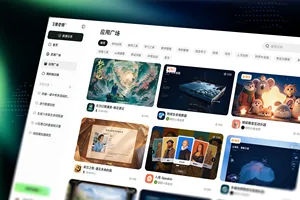 Feixiang Teacher 3.0 lets educators generate AI-powered learning apps from a single prompt
 Pearson launches official PTE AI practice tool for test takers
 Doushen Education H1 revenue up 16.95% to RMB 525M; AI segment tops 20% of sales
JMDedu is a leading B2B EdTech Media in China that informs and connects business professionals through our reports, events, and information services. Our mission is to drive the advancement of education. Our network spans the education industry in China as well as globally, including entrepreneurs, investors, startups, educators, business decision-makers, and policy decision-makers.

Copyright © 2014-2026 en.jmdedu.com All Rights Reserved